
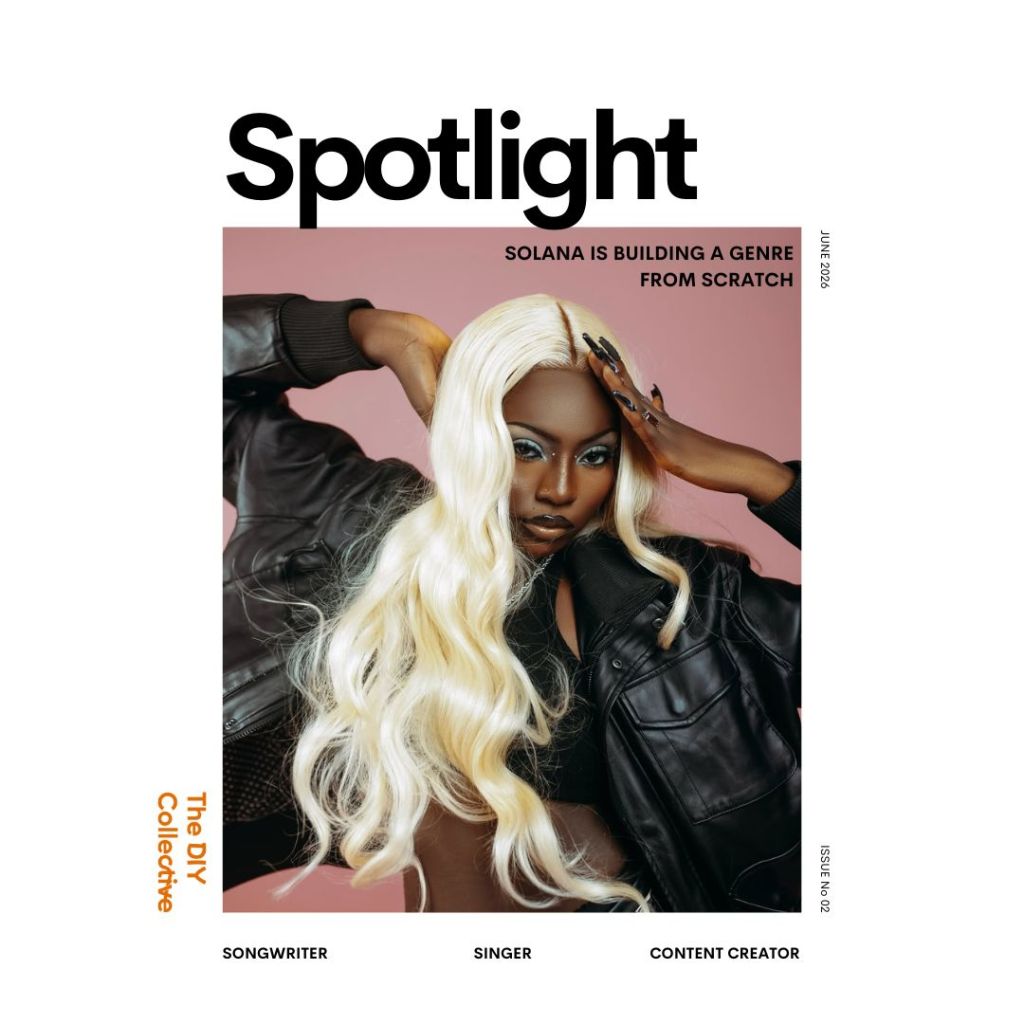
Solana isn’t the type to force her way into a conversation. She lets her work speak first: steady releases, consistent presence, the kind of grind most people don’t notice until a song hits differently and makes everyone ask: ‘Wait, who is this?’
Ogunlana Oluwabusolami Habibat, known professionally as Solana and also online as Badgal Solana or Solana Tii, is a Lagos-based recording artist and content creator. She emerges as one of the more intriguing new voices pushing Yoruba-language pop into contemporary, genre-blending territory.

She began her career in 2016 after singing in her church choir, gradually building an audience on TikTok and Instagram by sharing music, dance trends, and behind-the-scenes content. Her vocal delivery is confident, melodic, and rhythmic, often gliding over production that mixes spiritual introspection with club-ready bounce.
Her catalogue already tells a story of steady growth: Far Away (featuring Joeboy), On My Way (featuring Victony), Badder, and Most High all built her foundation before Mr Criminal introduced her to a much wider audience. Her music draws on Afropop, R&B, dancehall, and Afrobeats, and she has built a reputation for centring themes of honesty and lived experience in her songwriting. But it’s her most recent single that has industry tastemakers paying real attention.

Solana calls her sound ‘Yorupop,’ her own term for a fusion that places the Yoruba language and Yoruba cultural identity at the centre of contemporary pop and Afrobeats instrumentation. It’s a label that does a lot of work: it tells you immediately that this isn’t an artist borrowing culture as an aesthetic, but one building an entire sonic identity around it.
Her latest single, ‘Okunkun,’ featuring Killertunes, explores themes of faith and emotional resilience in the face of uncertainty. Sung largely in Yoruba, the song uses darkness as both a physical image and an emotional state, opening in a space of pressure and instability before slowly shifting toward reflection and trust.

Rather than dwelling in fear, Solana approaches the record as a quiet appeal for light, protection, and direction, carrying spiritual undertones centred on prayer, grace, and divine understanding.
”I wrote Okunkun from a very honest place,” she said, describing the song as something meant to feel like a private conversation with herself and with God, even in moments when life feels heaviest.
Interestingly, the track was actually recorded back in 2023 and rediscovered by Killertunes recently, reportedly while he was at the beach, before finally being released into the world as what’s being called a long-lost gem.
The single has already been featured in Afromixx’s New Music Friday round-up, described as a standout ‘Yorupop’ experiment, as well as in Pulse Nigeria, The Lagos Review, and OkayAfrica’s weekly best-new-music column, a remarkable spread of editorial attention for an independent artist with a still-modest following.
What sets Solana apart isn’t just the language she sings in; plenty of artists code-switch into Yoruba for flavour. It’s the intentionality behind it. She isn’t using Yoruba as an accent on top of a Western pop structure; she’s using it as the emotional and spiritual core of the music itself.
Killertunes’ production on Okunkun itself reflects that same instinct, fusing electronic pop, soft rock edges, dance rhythms, and traditional Yoruba (Ibile) elements, with echoes of 1970s Nigerian highlife legends like the Lijadu Sisters.
There’s also a rare patience to her work.
She currently sits at 24.9k followers on Instagram, 5,342 on X, and 8,811 on TikTok, numbers that, while still developing, undersell the scale of the editorial attention her recent work has pulled in. It’s a classic case of critical momentum outpacing follower count, which often signals an artist on the verge of a real breakout.

Solana represents something the DIY Collective cares deeply about: an artist building an entirely self-defined lane, on her own terms, in her own language, without waiting for an algorithm or a major label to validate the work first.
She took a culture, a language, and a deeply personal spiritual framework, and turned it into a sound nobody else is quite making right now. Yorupop might be her own coinage today, but if Okunkun is any indication of where she’s headed, it won’t be hers alone for long.
 The DIY Collective
Leave a Reply