

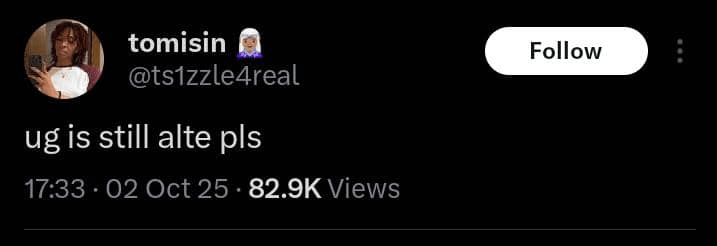
“ug is still alté pls”
Back in April, a new wave of underground artists stepped into the spotlight. Like a deer caught in headlights, the driver at the wheel was Santi.
If you’re not familiar with Cruel Santino, you might have been living under a rock for almost a decade. Since Mandy & the Jungle, he has carved out a place as a genre-bending creative, mixing sounds and pushing Nigeria’s alternative scene forward.
So when he started his Subaru Live Radio stream on Twitch, it wasn’t surprising to see both fans and haters tune in.

During one of these live sessions, he introduced his audience to a new crop of underground artists.
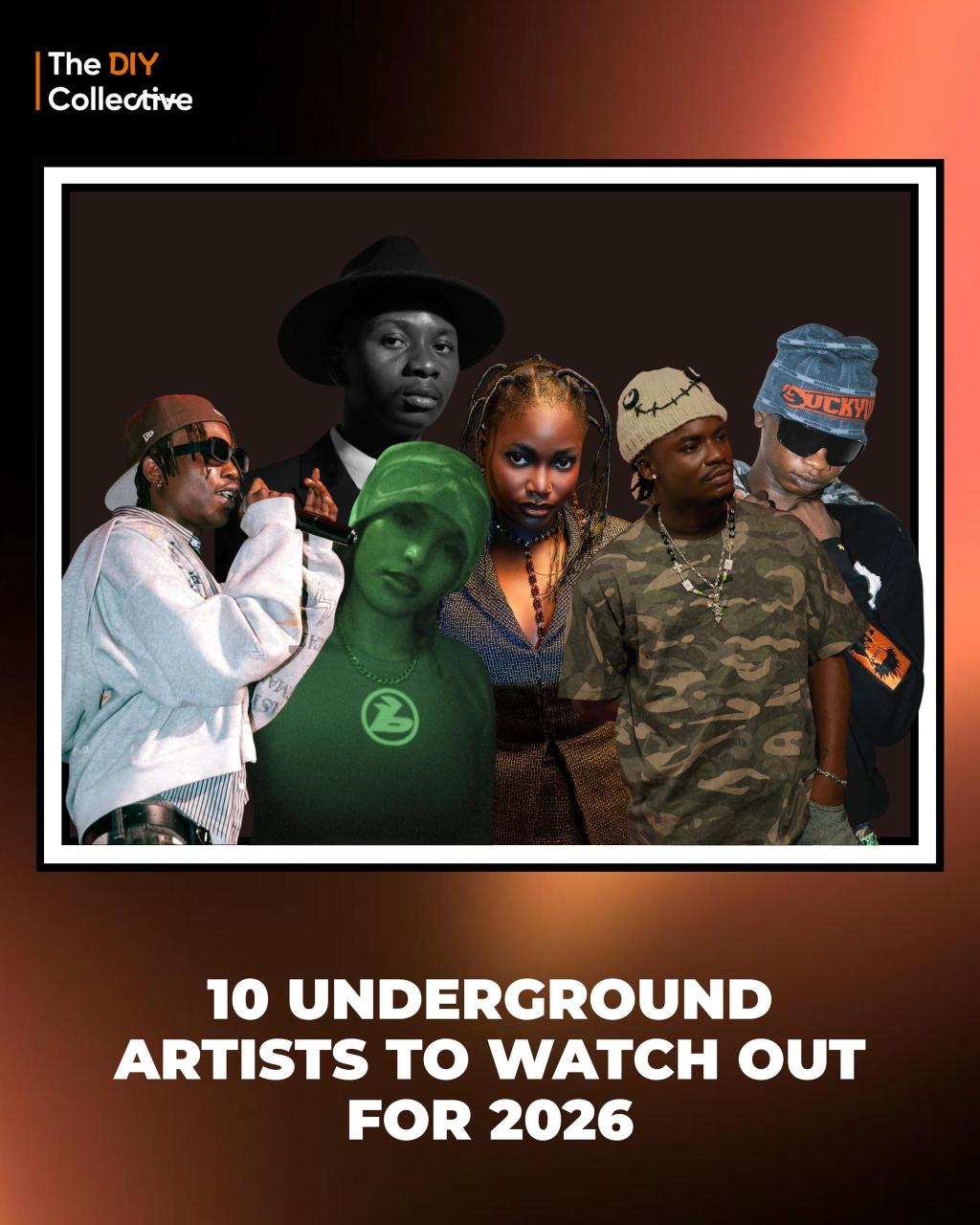
Names like Zaylevelten, Mavo, Wave$tar, Luwa.Mp4, Solis4evr, Ravington, and more got their first real platform through those streams. Today, these artistes are taking over in their own right, and Santi’s role in that shift can’t be watered down. He created space for fresh voices and gave the industry the breath of fresh air it badly needed in 2025.
But here’s the thing: these artistes didn’t just appear out of nowhere. They had been grinding, releasing music for years, building discographies that listeners could easily dive into once the spotlight found them. What set them apart was that they were prepared. When the door cracked open, they stepped through without hesitation.
Look at how Mavo’s Escaladizzy with Wave$tar took over the internet, or how Zaylevelten’s Watching Me and Maye still have the streets in a chokehold. These were not just viral moments; they’re proof of how ready the underground was to command attention once eyes and ears finally turned their way.
And these worlds are often built on community.
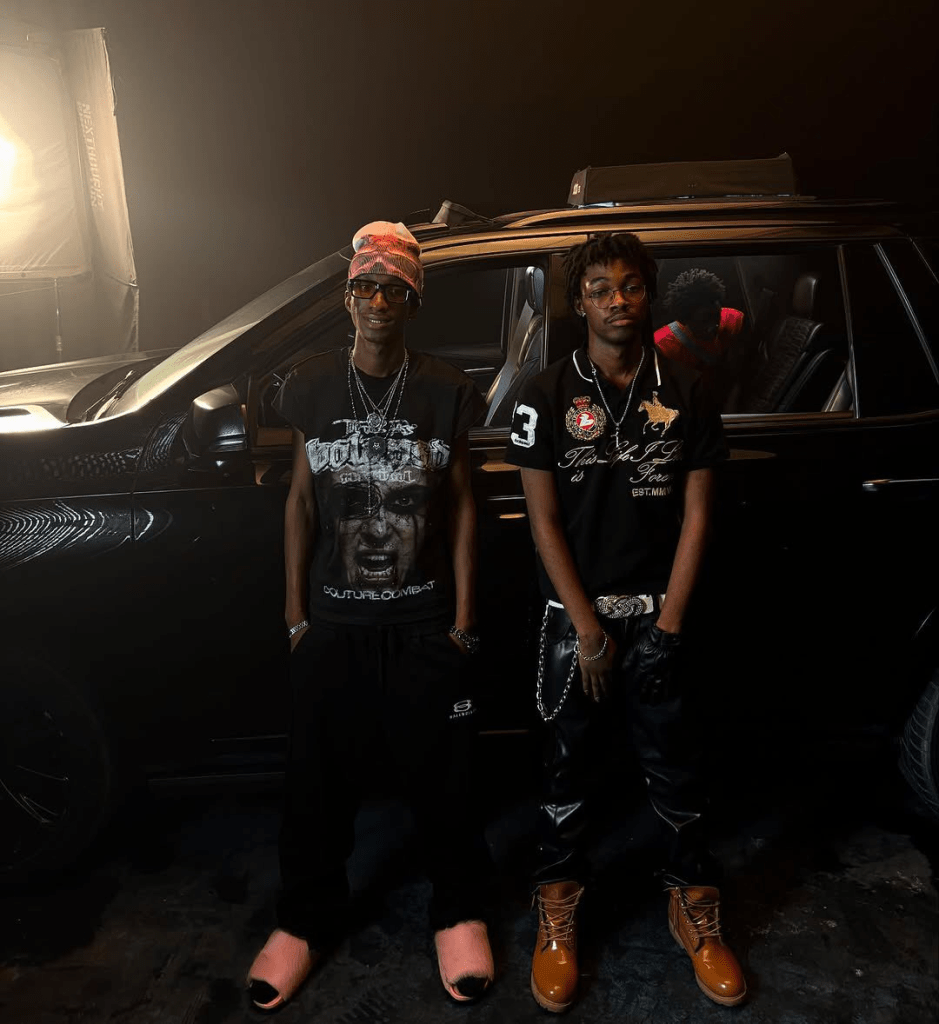
Underground artists might not have mainstream budgets or industry machines behind them, but they thrive off tight-knit circles. Whether it’s group chats, DIY shows, or shared fanbases, there’s a sense of togetherness driving the music. It’s not unusual to see these artists promoting each other, sharing resources, and collaborating across sounds. That energy has created a movement that feels less transactional and more human.
Of course, not everyone will be a fan. Some listeners dismiss the underground as “too different” or “not Nigerian enough.” But art has never been about pleasing everyone. These artists know that, and they keep rocking the boats they can. For every skeptic, there’s a community ready to stream, repost, and show up at their gigs.
Which brings us back to the bigger question: is underground music the same as alté?
Some of the artists mentioned do make alternative music, but others are rooted in Afrobeats, Pop, or R&B. Does being underground automatically mean you’re alté?
Take the backlash Zaylevelten faced when he insisted his music isn’t Afrobeats.

Not every sound from Nigeria is Afrobeats, just as not every underground artiste is alté. The underground is an umbrella for emerging acts. Alté, on the other hand, is a subculture and a sound with its own elements.
And there are nuances. Music doesn’t exist in a vacuum. When sounds cross cultures and regions, they absorb elements that create something new and relatable to the moment.
Zaylevelten, for example, makes trap-infused lamba. His music pulls from American trap icons like Playboi Carti and Young Thug, but he grounds it in Nigerian energy, infusing Mara beats, Igbo, Yoruba, Pidgin, and lamba. So when he says his music isn’t Afrobeats, he’s both right and wrong.
This year has been full of refreshing sounds. While mainstream Afrobeats has felt thin outside a few hits, the underground stepped up and delivered. They came prepared, unapologetic, and community-driven. Alté or not, the movement is thriving, and it’s not slowing down anytime soon.
 The DIY Collective
Leave a Reply