

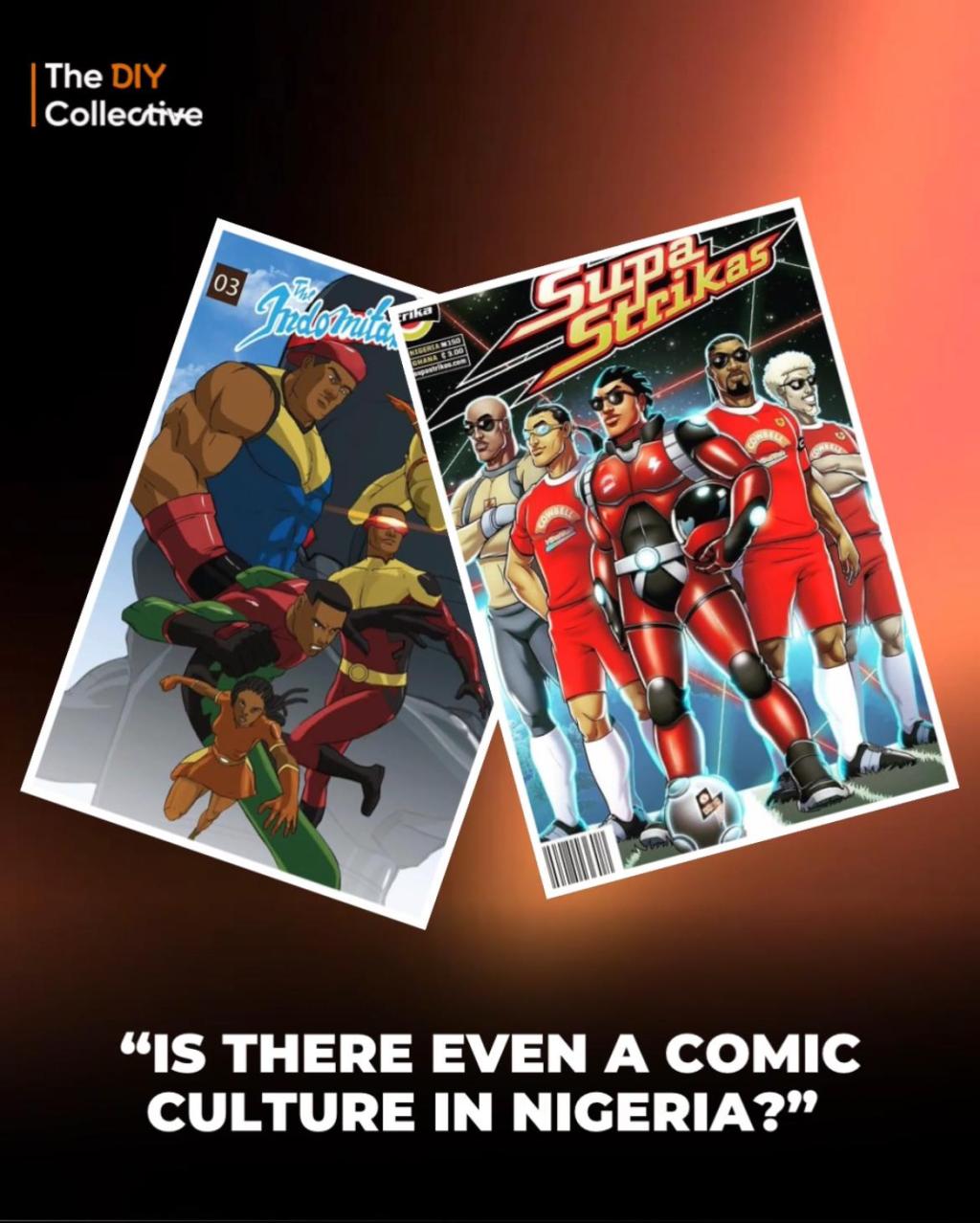
The real question should be, “Was there ever one?” The answer is yes, there was. Maybe not as in other countries, but it existed. And if you were a kid growing up in the early 2000s, you’d know exactly what I’m talking about.
Back in secondary school, novels were the holy grail among girls. Any genre they could get their hands on (romance, thriller, fantasy) would circulate the class like contraband. From table to table, girl to girl, until every girl in the class had their turn. Sometimes, there were multiple novels in rotation, and once the girls were done, they’d pass them down to other classes.
For the boys, we had our comics. For us, comics were beyond colored characters in panels, strips, and text bubbles; they were stories and adventures on every page.
The most relatable and most accessible one being Supa Strikas.

This comic was unique in every way, starting with each episode referred to as “ISSUES”—not chapters, not episodes, Issues. It also had popular sponsors like Oando, GTB, Cowbell, and even Milo.
We had movies and cartoons we waited to watch each day on our favourite TV stations, but the anticipation of getting the latest issue of Supa Strikas was even greater.
With each issue under 25 pages, you’d think they’d be quick reads, but somehow they lasted longer.
As far as I could remember, the latest issues were always available every Mr Biggs in Nigeria and subsequently available at specific stands at Shoprite. Just standing in front of the counter, staring at the covers, your imagination would run wild. What new challenge would Shakes (aka Sheggs) and the team tackle this time?

Visiting Mr Biggs and not leaving with at least one of the latest issues of Supa Srikas felt like a crime, so once we get a hint of a Sunday treat to Mr Biggs, we’ll save up our pocket money to get at least one.
Walking into school the following week with a new issue no one in the school has read makes you the instant force to reckon with for the day, or a few days in some cases. From everyone taking turns to read, down to the discussions about favourite characters and also other explaining issues no one else but you has read, is an additional spotlight on you for the day.
This made us explore another genre of comics, totally different from Supa Strikas, Archie comics, a sweet spot for both boys and girls.

Archie, with his two love interests, Betty and Veronica, gave us romance, drama, and comedy all in one. And while the central love triangle was a hook, it was the rotating POVs, art style, multiple episodes in one comic book, and lighthearted storytelling that made it a true fan favorite. It was something you could bond over, no matter who you were.
Lastly, something a little closer to home, Indomitable Comics.

Indomie is the household name for every type of noodle in Nigeria. A marketing strategy they used many years ago to appeal more to kids was creating five characters with each of them having unique superpowers, mirroring the benefits kids get from eating Indomie noodles. This group of 5 superheroes formed a team called The Indomitables, and stickers of each of these characters were also inside every pack of Indomie, which was a solid marketing move.
A few years down the line, these characters were given more indept stories and adapted into a comic series, and different episodes were found in every carton of Indomie.
This also made things so interesting because everyone brought new episodes they found to school for everyone to read; it felt like we had individual pieces to complete an entire puzzle.
While growing up, I wasn’t a big fan of reading, but because of the art style and story, I never turned down an opportunity to read a comic book. I’ll say that has also made me develop an interest in reading other styles of comics like Manga and Manhua.

Which brings me to my next point: why don’t we have a unique style of comic exclusive to the Nigerian culture? The Comic culture, for example, is massive in the US. Some people are collectors who own a large amount of vintage comics, and the icing on the cake is events like COMIC-CON.

The same can be said for Manhua and Manga. Aside from having their unique style of art, these comics carry stories that are adapted into anime, sometimes live-action movies, and many more. People stay up to be one of the first sets of people to read the new chapter of a popular manga when it drops, and there’s always a rave about a particular panel for weeks across Reddit, TikTok, and Twitter.
Now the question is, are Nigerians uninterested in comics, or have we just not been given the right stories in the right formats?
We’ve always been drawn to stories through music, film, books, and even street banter. So why should comics be any different? The potential is massive. Imagine a comic series rooted in Yoruba mythology, or stories set in the ancient Benin Empire, or even modern tales about Lagos teens navigating real-world chaos with supernatural gifts. The appetite is there, but we need more creators, more platforms, and more support to keep this world alive and thriving.
The good news is, we’re seeing the sparks. Creators are rising. Stories are bubbling beneath the surface. From digital platforms to publishers and even events, there’s a slow but steady movement of artists, writers, and dreamers who are pushing to define what a true Nigerian comic culture could look like. Shout out to Comic Republic, Panaramic Comics, Lagos Comic Con, and individuals like Santi.
And maybe, just maybe, in a few years, a kid in secondary school will walk into class with a new issue of a Naija comic and instantly become the guy again, just like we once were.
 The DIY Collective
Leave a Reply