

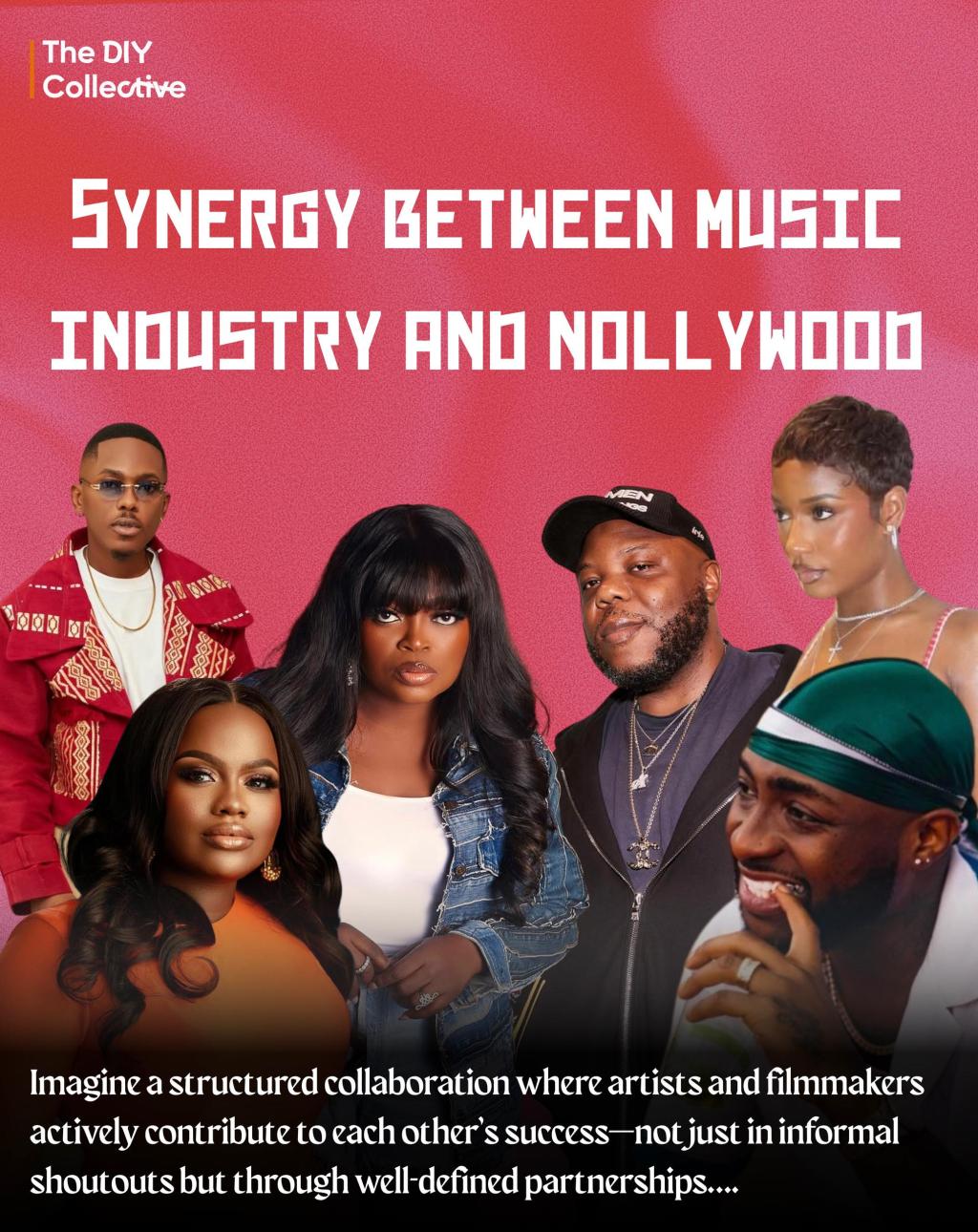
A few weeks ago, Timini tweeted, “Really wish musicians supported Nollywood the way we support their music, but that’s a conversation for another day.” As much as that may not be entirely true because Bizzle quoted the tweet, “Hmmmm, baba no talk like this o. You know how long Nollywood dan dey use artist music free and no pay dem. Don’t speak for all sha, only speak for yourself”, it does raise an interesting conversation.
Thinking about it now, if there’s synergy between the Nigerian music industry and Nollywood, the possibilities are endless.
Imagine a structured collaboration where artists and filmmakers actively contribute to each other’s success—not just in informal shoutouts but through well-defined partnerships.
In Hollywood, major films often have dedicated soundtracks that can amount to a full album, which are then released on digital streaming platforms (DSPs). The artists involved in these projects make songs or sounds that are specifically crafted for certain scenes or sections of the films.
A great example is No Woman No Cry by Tems for the Black Panther: Wakanda Forever Official Teaser.
That song paired with that trailer immediately set the tone for what’s to come: mourning the death of King Tchala and the weight of leadership on Queen Ramonda and Shuri, the subtle introduction of the villain, and the underlying assurance everything will be alright in the end.
Nollywood has had moments like this too. You can’t deny soundtracks like Billionaire, and Happy Mumu by Stanley Okorie, just to mention a few enhanced the storytelling of the movies they were created for.
There was also a time when Tope Alabi’s soundtracks were an integral part of Yoruba Nollywood, with songs like the Omotara Johnson soundtrack enriching the storytelling beyond just dialogue.
Now imagine Nollywood fully embracing this model. What if major films came with carefully curated soundtracks, officially released, properly monetized, and strategically marketed?
Picture a Kunle Afolayan, Funke Akindele, Kemi Adetiba, or Jade Osiberu film with an original soundtrack featuring top Afrobeats acts like Rema, Ayra Starr, or Omah Lay. A combo of Olamide and Reminisce making soundtracks for intense, street-style, gang-action scenes. Just like the song used in the score of King Of Boys is Original Gangster by Sess ft Adekunle Gold & Reminisce.
Each song would be tailored to enhance the movie’s storytelling, just as Black Panther had a groundbreaking album curated by Kendrick Lamar.
Beyond that, what if the artists premiere exclusive songs in films before their official release? Imagine a Tiwa Savage song debuting in a pivotal scene of a Nollywood blockbuster before hitting DSPs, building anticipation, and driving streams.
And the collaboration doesn’t have to stop at music. Artists could make strategic cameos in films, just like American musicians do in Hollywood. Imagine a Burna Boy playing a streetwise hustler in a gritty Port Harcourt drama, or Fireboy starring in a Gen Z romantic movie.
All this may seem beneficial to the artists alone but think about the recognition or attention these featured artists will bring to these movies. Let me break it down: an artist with a huge following across different countries, millions of social media followers, and global reach either makes a cameo in a movie, premieres an exclusive soundtrack, or collaborates with other artists to curate an entire soundtrack album.
Their presence would not only bring star power but also attract their music fan base to the movie.
How will this work though? sync licensing deals, fair compensation, and mutual promotion?
If done right, Nollywood and the Nigerian music industry could propel each other to even greater heights. Maybe it’s time for both industries to stop seeing themselves as separate entities and start working together as allies. If executed correctly, this could mark the beginning of a golden era where Nigerian music and film fuel each other’s global dominance.
 The DIY Collective
Leave a Reply