


Anthony Azekwoh is a contemporary artist, author, and entrepreneur from Lagos, Nigeria, celebrated for his fusion of African folklore with modern storytelling. Having toured Lagos, London, New York, and Abuja, his recent exhibition “There is a Country” has garnered global acclaim, showcasing his ability to blend traditional and digital mediums. Anthony’s work bridges cultural divides, captivating audiences worldwide and has cemented his place as an art maven since he rose to fame in 2020 when his artwork – ‘The Red Man’ sold for $25,000 as an NFT.
As the founder of Anthony Azekwoh Studios, he pioneers the convergence of art, literature, and technology, bringing authentic African narratives to the forefront. He has also collaborated with Nigerian musicians such as Young Jonn, Kinfxlk, Adekunle Gold, and Blaqbonez, bringing their cover arts to life with his distinctive style.
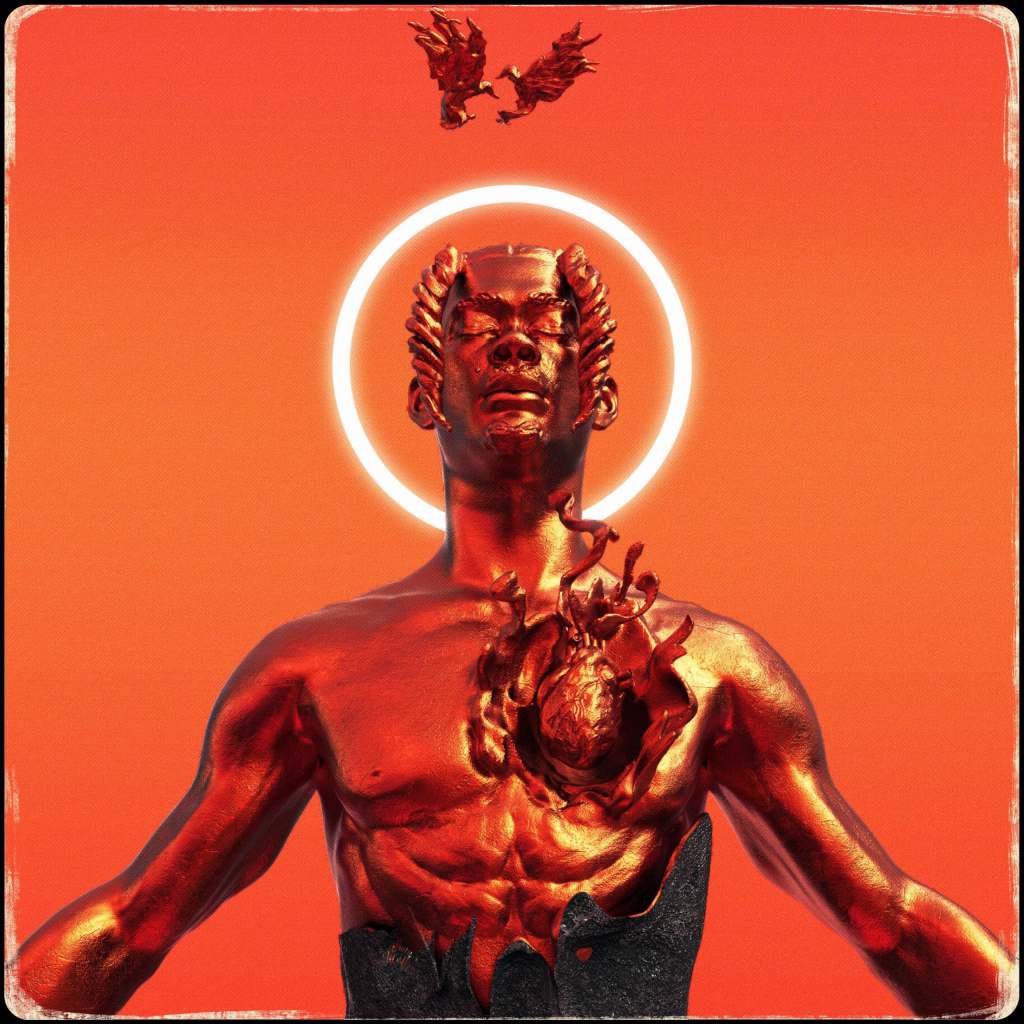
Here’s an insight into our quick chat with Anthony about all things artistic—the impact and influences on his career trajectory so far.
Can you share with us your artistic journey and how you discovered your passion for visual art?
I started painting about 7 years ago when my laptop broke and I didn’t have a way to properly scratch that creative itch and so I took some pens, some paper and started drawing some designs on them, after, I realised I was really interested in digital work and so I stole my sister’s mouse and got into it, that’s how I learned to draw.
What inspires your creativity and influences your artistic vision?
I’m inspired by our culture, our fashion, our language, life itself as we know it, really.
Are there any particular artists, movements, or cultures that have influenced your work?
I’m a big, big fan of neoclassical work, Jacques-Louis David especially. The structure and depth he was able to imbue with his work is incredible. Yusuf Grillo is another artist whose use of colour-blue especially was very distinctive.
What mediums and techniques do you primarily work with, and what drew you to them?
I work primarily digital and for what drew me to them, I’d say the ease of being able to do something so grand in my room without the need for too many tools was really it. When I started, it meant I didn’t have to pay a lot for all these tools and brushes and whatnot (I couldn’t afford them), so it made things easier.
Could you describe your artistic style and any recurring themes or motifs in your work?
I’d say the African heritage and presenting us in the best light possible and telling our stories is what, to me, is important and a recurring message I always come back to.
Can you talk about a project or series that is particularly meaningful to you and explain its significance?
The new project i’m rolling out, Ówàḿbẹ̀, is one that I really love. It’s a story I’ve been telling for two years and one that I’m really proud of. Being able to bring my sculptures to life in this way, to see and interact with them has been incredible.
How do you navigate the balance between staying true to your artistic vision and adapting to different projects or collaborations?
It’s always a big give and take, and realising for both parties where our strengths lie and where we can properly make something together that’s greater than the sum of its parts. I’m very big on the fact that everyone has a creative vision and a lot of what my job is, is making that vision visually appealing and bringing it to life.
What role do you think visual art plays in society, and how do you hope your work contributes to the conversation?
Visual art is important because it’s able to be consumed incredibly quickly and leave a lasting impression on a communal audience, it binds us together and educates, enlightens and entertains us. I hope my work is, at the end of the day, able to tell a story of this time and age.
Finally, what advice would you offer to aspiring visual artists who are looking to pursue a career in the art world?
For advice, I’d say: stay at it. It’s hard on each level and the higher it gets, the harder it gets, but I’m a firm believer that things work themselves out in the end if you stick to them long enough.

 The DIY Collective